Curious about trail running—or wondering what it really takes to tackle a trail race? We asked our in-house trail enthusiast and specialist, Scott from our Green Bay location, to take us along for the ride. He’s sharing a recap of his latest trail race, what the experience was really like, and the gear he relies on to get through the miles, terrain, and everything the trail throws his way.
I recently ran the Stewart Tunnel 50M, part of the Badger Trail Races on the Badger State Trail. This was my 51st ultramarathon so you would think I would have it down to a science by now. I don’t. I have it pretty well dialed in, but each race is a learning experience and my process is continuously evolving. This one provided some new challenges for me. All of my other ultras have been on dirt trails – hiking trails, ski trails, mountain bike trails, fire roads. Trails with lots of ups and downs, twists and turns, rocks and roots. All sorts of obstacles that make you think and slow you down. The Badger Trail Races are on a smooth, flat, crushed gravel rail to trail. This takes a different strategy and some gear adjustments.
Race Plan:
The first challenge, since the course is so runnable, was to keep from going out too fast and burning out before I hit the halfway turn around. All of my other ultras have had steep or long hills to power hike up and work different muscles. This was more like running back to back flat marathons. I opted to use a run/walk strategy. I ran for 8 minutes, then walked for 2 minutes. (I actually wore two watches. I had my old Garmin Forerunner 230 set up for repeats to time the run/walk. My COROS Apex tracked my overall mileage, pace, and time.) The idea is to walk before you get tired. You go a little slower at the start, but the periodic walk breaks keep your legs fresher so that you can be faster at the end. It worked very well. There is a 12 hour cut off for finishing the 50 miles. I wanted to hit the turn around by 5 hours so I had plenty of cushion to finish. I made it in 4:50 and feeling good.
Gear:
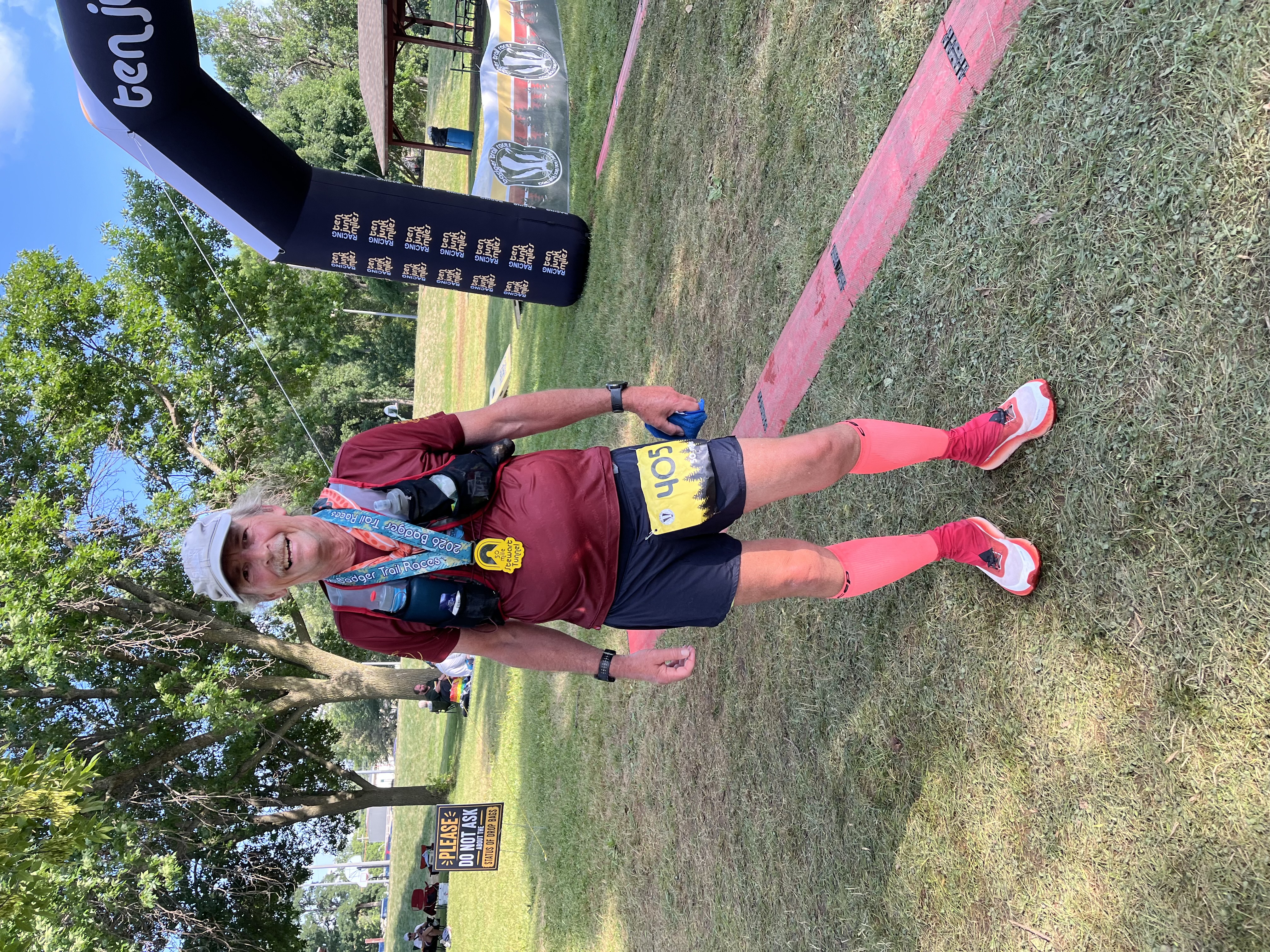
When you are running for 10-12 hours, what you wear is critical to your success. Painful chafing has brought many runners to an uncomfortable early end to their endeavor. My shorts of choice is the Brooks High Point 2 in 1 shorts. They have a compression short liner that helps reduce chafing. They also have easily accessible pockets all around the wait band to stash necessities and goodies. My phone goes securely in one front pocket. Assorted nutrition items fill the rest. It all fits snugly without any bounce. For distances up to 50 miles, I wear CEP Core Run Tall Compression socks. They help keep my calves from getting too fatigued and give an extra protection barrier from whatever might be growing on the edge of the trails. I also have not gotten any blisters wearing them. To keep gravel from getting into my shoes, I use trail gaiters. (No brand on these, they were swag from another trail race.) What was different for this course was my shoes. Normally I wear a lower profile trail shoe with good lugs for traction like the Altra Lone Peak or Saucony Peregrine. With all the hard packed gravel on the course, cushion was more of a priority than traction. I went with the Mount to Coast H1. It is a road to trail shoe with plenty of responsive foam to protect my legs from the pounding on the harder surface and just enough extra traction for confidence on any loose gravel. It was going to get hot in the afternoon, so I tried out another new item for me, an ice bandana that I had received as swag from a race last year. It is a triangular neck bandana with a pocket to hold ice. I filled it with ice at an aid station and tied it around my neck. The ice would last until I got to the next aid station to refill. It made a big difference as the temps went up. The final touch is lube to protect all the sensitive areas. I use Squirrel’s Nut Butter for my upper body parts. Trail Toes is my lube of choice for my toes and feet.
Nutrition:
The other area that can make or break an ultramarathon is nutrition and hydration. Get it right and you cruise to the finish. Get it wrong and it could end your race. Poor hydration is hard to recover from, but possible if you catch it early enough. It is even harder to dig your way out of a calorie hole if you fall short on nutrition. You body can only process just so many calories at a time. Making the wrong choice on nutrition can also cause stomach upset which can crash your race. Sometimes I get it right. Sometimes I don’t and struggle for the rest of the race or even miss a cut off time and have to drop. Using the run walk strategy helped keep me on track with nutrition. Evey ten minutes when I would take a walk break, I would nibble on some fuel. Some people find one go-to fuel and that is all the use. I prefer variety, and it changes with every race. For this one I had Skratch Energy Bars, Mini Pay Day candy bars, individual packets of Kroger Simply Classic Trail Mix, and homemade peanut butter balls. I alternated what I ate each time. I supplemented that with bananas and watermelon at the aid stations and a bit of grilled cheese late in the race. When I needed a quick boost I reached for a gel. Again, variety is key for me. I had Maurten Gel 160, Huma Ultra, and Huma +. My trail vest has two bottles. I put water in one and sports drink in the other. The on-course drink was Ucan Hydrate. This is strictly an electrolyte drink. I prefer some calories in my drink too. I alternated the Ucan with Tailwind Endurance Fuel. As it got hot later in the afternoon, I boosted my Tailwind with a packet of LMNT (available in store at Run Away Shoes).
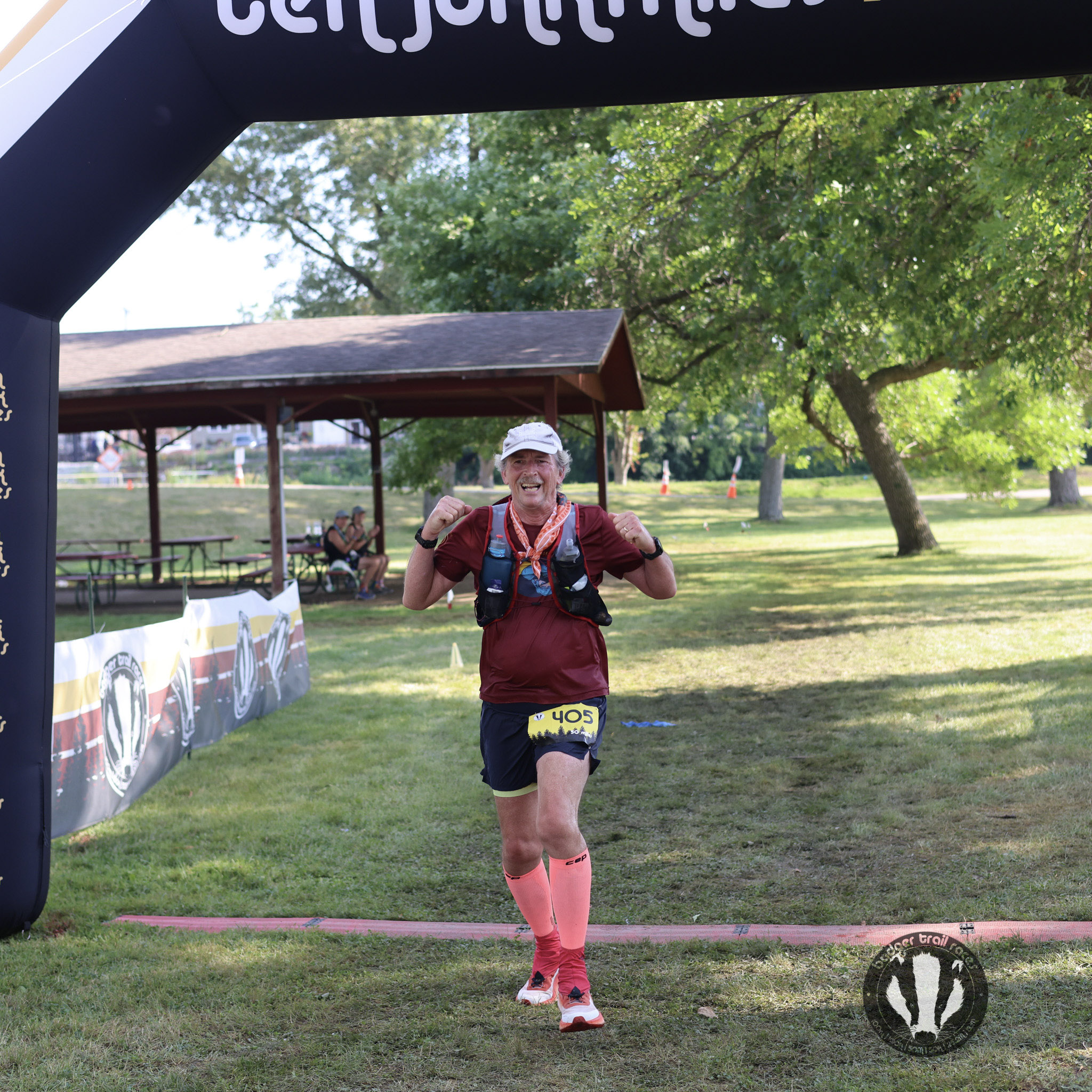
It is a real mix of everything that gets me through an ultra. There is so much that can go wrong as your races get longer. This time, it all worked. I kept up on my nutrition. I stayed hydrated. Only had a little unexpected chafing from wearing the wrong shirt. No foot issues. I beat my time goal of 11 hours by 2 minutes to finish in the top 50% as the oldest runner in the race.